


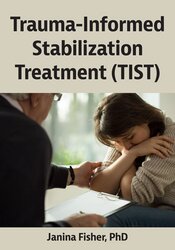
Trauma-Informed Stabilization Treatment (TIST)
A Somatic Approach to Working with Parts
- Speaker:
- Janina Fisher, PhD
- Duration:
- 2 Hours
- Language:
- Presented in EN, subtitles in EN, ES, DE, IT, and FR, handouts in EN, ES, DE, IT, and FR
- Copyright:
-
14 Oct, 2023
- Product Code:
- POS059549
- Media Type:
- Digital Seminar

Description
Trauma treatment is rarely straightforward. Clients want help but resist connecting emotionally. Many are tormented by critical self-hating thoughts or want to die, jeopardizing their ability to process the trauma. TIST is a new trauma-informed treatment that directly addresses the challenges, not just the events, of a traumatic past. In TIST, we view these trauma-related thoughts, emotions, and impulses as communications from fragmented, disowned trauma-related parts. When clients form meaningful attachment relationships to these young, rejected parts, the trauma often resolves spontaneously. When the parts finally experience safety and care, the traumatic past feels done and behind them.
Credit
Speaker

Janina Fisher, PhD Related seminars and products
Janina Fisher, PhD, is a licensed clinical psychologist and former instructor at The Trauma Center, a research and treatment center founded by Bessel van der Kolk. Known as an expert on the treatment of trauma, Dr. Fisher has also been treating individuals, couples, and families since 1980.
She is past president of the New England Society for the Treatment of Trauma and Dissociation, an EMDR International Association Credit Provider, Assistant Educational Director of the Sensorimotor Psychotherapy Institute, and a former Instructor, at Harvard Medical School. Dr. Fisher lectures and teaches nationally and internationally on topics related to the integration of the neurobiological research and newer trauma treatment paradigms into traditional therapeutic modalities.
She is co-author with Pat Ogden of Sensorimotor Psychotherapy: Interventions for Attachment and Trauma (2015) and author of Healing the Fragmented Selves of Trauma Survivors: Overcoming Internal Self-Alienation (2017) and the forthcoming book, Working with the Neurobiological Legacy of Trauma (in press).
Speaker Disclosures:
Financial: Dr. Janina Fisher is an international expert and consultant on Trauma and Dissociation. She is a consultant for Khiron House Clinics and the Massachusetts Department of MH Restraint and Seclusion Initiative. Dr. Fisher receives royalties as a published author. She receives a speaking honorarium, recording royalties and book royalties from Psychotherapy Networker and PESI, Inc. Dr. Fisher has no relevant financial relationships with ineligible organizations.
Non-financial: Dr. Janina Fisher is on the advisory board for the Trauma Research Foundation. She is a patron of the Bowlby Center.
Additional Info
Program Information
Access for Self-Study (Non-Interactive)Access never expires for this product.
For a more detailed outline that includes times or durations of time, if needed, please contact cepesi@pesi.com.
Objectives
- Summarize the Structural Dissociation model
- Identify thoughts, feelings and bodily responses indicative of trauma-related parts
- Describe three interventions for stabilizing parts and resolving the trauma
Outline
Fragmentation and Self-Alienation as an Adaptation to Trauma
- Why clients fragment to survive
- What tells us that a client is ‘fragmented’?
Overcoming Self-Alienation and Self-Rejection
- Acknowledging and responding to traumatized parts
- Welcoming them home: forming internal attachment bonds to heal trauma
Target Audience
- Counselors
- Psychotherapists
- Social Workers
- Case Managers
- Psychologists
- Marriage & Family Therapists
- Addiction Counselors
- Nurses
- Nurse Practitioners
- Clinical Nurse Specialists
- Other Mental Health Professionals
- Occupational Therapists & Occupational Therapy Assistants
Reviews
Satisfaction Guarantee
Your satisfaction is our goal and our guarantee. Concerns should be addressed to info@pesi.eu.
Please wait ...