
Not Found
Digital Seminar

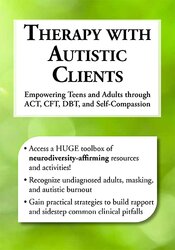
Therapy with Autistic Clients: Empowering Teens and Adults through ACT, CFT, DBT, and Self-Compassion


Speaker:
Jennifer Gerlach, LCSW
Duration:
6 Hours 05 Minutes
Language:
Presented in EN, subtitles in EN, ES, DE, IT, and FR, handouts in EN, ES, DE, IT, and FR
Copyright:
14 Jun, 2024
Product Code:
POS059743
Media Type:
Digital Seminar


Description

The correlation between autism and anxiety, phobias, suicidality, depression, and other mental health disorders is well-established.

But the complexities involved in treating autistic and other neurodivergent clients often result in less-than-ideal clinical outcomes.

Watch Jennifer Gerlach, LCSW, a neurodivergent psychotherapist and author, in this one-of-a-kind course focused on giving you the confidence and specialized intervention tools you need to maximize your therapeutic results in working with teens and adults with diagnosed or suspected autism.

You will finish with the ability to:

  • Recognize signs of masking in your assessment process to get to the underlying diagnosis
  • Apply neurodiversity-affirming ACT, CFT, DBT, and self-compassion interventions for depression, anxiety, and other mental health concerns
  • Minimize verbal and non-verbal communication barriers and sensory processing differences in the therapeutic process
  • Employ interventions for families, couples, and group work with neurodivergent youth and adults

Purchase now to effectively meet the critical needs of this growing population.

Credit


Self-Study Credit

This self-study program consists of 6.25 clock hours of continuing education instruction. Credit requirements and approvals vary by country and local regulatory bodies. Please save the course outline, the certificate of completion you receive from the activity and contact your local regulatory organization to determine specific eligibility and requirements. 


Handouts

Speaker

Jennifer Gerlach, LCSW's Profile

Jennifer Gerlach, LCSW Related seminars and products


Jennifer Gerlach, LCSW, is a psychotherapist in private practice in southern Illinois specializing in the crossroads of mental health, trauma and neurodiversity utilizing interventions informed by compassion-focused therapy, acceptance commitment therapy, EMDR and other traditions. Jennifer is the author of The Psychosis and Mental Health Recovery Workbook: Tools for Young Adults from ACT, DBT and Recovery-Oriented CBT and writes a blog for Psychology Today entitled ‘Beyond Mental Health: Defying Stereotypes and False Limitations.’

Jennifer has provided training to hundreds of clinicians nationwide on topics related to neurodiversity, mental health and healing trauma. She offers a unique perspective infused with her lived experience as an individual who has walked her own journey toward mental health and self-acceptance as an autistic person herself.


Speaker Disclosures:

Financial: Jennifer Gerlach maintains a private practice and receives royalties as a published author. She receives a speaking honorarium from PESI, Inc. She has no relevant financial relationships with ineligible organizations.
Non-financial: Jennifer Gerlach has no relevant non-financial relationships.


Additional Info

Program Information

Access for Self-Study (Non-Interactive)

Access never expires for this product.

For a more detailed outline that includes times or durations of time, if needed, please contact cepesi@pesi.com.


Objectives

  1. Utilize assessment strategies to identify neurodivergent clients.
  2. Choose interventions to improve self-compassion, self-acceptance, and self-validation in neurodivergent clients.
  3. Use community interventions to reduce isolation and social exclusion.
  4. Determine how to adapt traditional psychotherapy strategies to meet the needs of neurodivergent clients.
  5. Choose strategies to build self-advocacy skills in neurodivergent youth.
  6. Utilize compassion focused strategies to reduce rejection-sensitive dysphoria.

Outline

Core Concepts of Autism and Other Neurodiversities
Foxes and wolves: experiencing the world differently

  • Diagnostic features
  • Neurodiversity-specific phenomena
    • Executive functioning
    • Sensory processing
    • Alexithymia
  • Intense world theory
  • Intersectionality with gender identity
  • Common mental health comorbidities
  • Counseling with a neurodiversity-affirming lens

Neurodiversity Screening and Assessment

  • Red flags of undiagnosed adults
  • Intake screening tools for common comorbid conditions
    • Depression and anxiety
    • Eating disorders
    • School dropout
    • Addictions
    • Suicidality
    • Social anxiety
  • Assessment strategies using a neurodiversity-affirming lens
  • Characteristics of autism vs. mental health diagnoses
  • The impact of masking on diagnostics
  • Case study: Autistic college student, presenting with severe anxiety

Autism in the Therapy Room

  • Create safety through sensory and communication techniques adopted from DBT and CFT
  • Set up the environment and capitalize on the need for routine
  • 3 must-use rapport-building activities
  • CFT strategies to increase a client’s emotional and somatic awareness while building self-compassion

From Knowledge to Practice
Address the Fall-Out of Living in a Neurotypical World

  • Five executive functioning skill-building strategies to reduce autistic burnout
  • Compassion-focused approaches to minimize rejection-sensitive dysphoria
  • Community interventions to reduce isolation and social exclusion
  • Strategies to minimize meltdowns and shutdowns through dialectical approaches
  • Double empathy and its impact on relationships
  • Limitations of the research and potential risks

Counseling Autistic Adults
Practical Applications of Inclusive Therapy Modalities

  • ACT strategies to create self-compassion
  • LAND: a DBT-inspired framework for selfadvocacy
  • Adaptive strategies to elicit value-based goal setting
  • Address sexuality and romantic relationship challenges
  • Couples’ work – 3 strategies to enhance empathy and communication
  • CBT approaches to support employment and move toward value-based goals

Counseling Autistic Teens
Interventions with a slightly different approach

  • Strategies for family therapy
  • Bully-proofing ACT strategies
  • Play therapy approaches to build resilience
  • Refocus activities to calm the mind storms
  • Talk to kids about their brains
  • Exercises for self-advocacy and self-efficacy
  • Tools to help kids build genuine social connections
  • Case study: Youth Talking Circle

Target Audience

  • Social workers
  • Counselors
  • Psychologists
  • Psychotherapists
  • Addiction Counselors
  • Art Therapists
  • Marriage & Family Therapists
  • Behavioral Health Nurses
  • Psychiatrists
  • Occupational Therapists
  • Other Mental Health Professionals

Reviews

Satisfaction Guarantee
Your satisfaction is our goal and our guarantee. Concerns should be addressed to info@pesi.eu.

Please wait ...

Back to Top