


Identifying and Treating the 1 in 5 students with ADHD and Learning Disabilities who are Returning to School Misdiagnosed and Misunderstood
- Speaker:
- Lynne Kenney, PsyD
- Duration:
- 1 Hour 35 Minutes
- Language:
- Presented in EN, subtitles in EN, ES, DE, FR, and IT, handouts in EN, ES, DE, FR, and IT
- Copyright:
-
20 Jul, 2021
- Product Code:
- POS058555
- Media Type:
- Digital Seminar

Description
We are all aware that the pandemic of 2020 brought to light inequities in education that have persisted for the past 20 years. Our challenge now is that the magnification of such dilemmas calls for immediate science-based actions. In this presentation, Pediatric Psychologist, Dr. Lynne Kenney integrates research and practice from psychology, cognitive science, public health, education, kinesiology, occupational therapy, and speech-language therapy to provide a uniquely actionable perspective on the application of executive function, social-emotional, and sensory-motor skills poised to shift a generation of learners. We spend billions of dollars on academic curriculum, when our time, energy, and resources are better spent on cognitive skill-building, social-emotional learning, phonology, numeracy, physical literacy, and mental health services for all.
Credit
Speaker
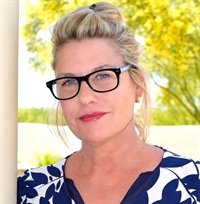
Lynne Kenney, PsyD Related seminars and products
Move2Think, LLC
Dr. Lynne Kenney is the nation’s leading pediatric psychologist in the development of classroom cognitive-physical activity programs for students grades K-8. She develops curriculum, programming, and activities to improve children’s cognition through coordinative cognitive-motor movement, executive function skill building strategies, and social-emotional learning. Her current educational program is CogniMoves®, a classroom cognitive-motor movement program, co-developed with Benjamin S. Bunney, MD, Former Chairman Department of Psychiatry at Yale University. CogniMoves® is designed to strengthen executive function skills in K-3 students.
Dr. Kenney is a pediatric psychologist on the language & cognition team at Wellington-Alexander Center for the Treatment of Dyslexia, Scottsdale, Arizona. She has advanced fellowship training in forensic psychology and developmental pediatric psychology from Massachusetts General Hospital/Harvard Medical School and Harbor-UCLA/UCLA Medical School. As an international educator, researcher, and author, she is dedicated to improving the trajectory of children’s learning, particularly in high-need, under-resourced communities. Dr. Kenney’s books include Brain Primers, 2020 (Kuczala & Kenney); 70 Play Activities for Better thinking, Self-Regulation, Learning and Behavior (Kenney & Comizio, 2016); the Social-Emotional Literacy program, Bloom Your Room™; Musical Thinking™, and Bloom: 50 Things To Say, Think and Do with Anxious, Angry and Over-the-Top Kids (Kenney & Young, 2015). Her most recent endeavor is Cognitivities™, an original collection of portable mats that combine music, art, and movement developed with Fit and Fun Playscapes. Launched in 2024, this is the first Roll-Out Activities® mat of its kind, helping children with cognitive skills, executive function, and self-regulation in a calming and engaging way. In development, FlowMoves™ cognitive-motor movement cards for high-need communities and families to support co-regulation and self-regulation.
Since 1985, Dr. Kenney has worked as an educator in community services with national organizations including the Neurological Health Foundation, Head Start, Understood.org, HandsOn Phoenix, SparkPE, the First Nations in Canada, and Points of Light (Generation On). Dr. Kenney values working with Title I Schools.
Speaker Disclosures:
Financial: Dr. Lynne Kenney is the creator of CogniSuite & The Kinetic Classroom and the co-creator of 5n45. She is the co-owner of Move2Learn, LLC and has an employment relationship with Wellington-Alexander Center for the Treatment of Dyslexia and receives compensation as a consultant. Dr. Kenney receives royalties as a published author. She receives a speaking honorarium and recording royalties from PESI, Inc. She has no relevant financial relationships with ineligible organizations.
Non-financial: Dr. Lynne Kenney is Play Math Ambassador.
Objectives
- Understand the neurobiology of learning.
- Learn why the achievement GAP impacts all of us.
- Understand the development precursors to learning.
- Learn what you can do to impact the neurobiological domains of learning and behavior.
- Learn about current assessment technologies and tools (not taught in grad school) that answer questions more relevant to learning, mental health, and behavior.
- Learn the role of building cognitive and self-regulation skills in the improvement of academic outcomes.
- Understand the role of Structured Literacy and Foundational Numeracy in improving academic, social, and behavioral outcomes.
- Learn the three things (you were not taught) to screen for if you are working with a student who is anxious or depressed.
- Learn an evidence-based assessment, treatment, and intervention methodology to improve learning and behavioral outcomes in your clients/students.
Outline
Part I- The Neurobiology of Learning
- Impact of Poverty on Brain Development
- The Achievement Gap
- Academic Progress (We are Behind)
- Developmental Precursors to Learning
- Actions We CAN Take
- Improving Fundamental Neurobiological Skills
- Predict Achievement Better Than IQ
- Benefits of Executive Function Skill Development
- Co-Existing Condition Matter (A LOT!)
- Assessment
- Treatment Planning
- Progress Monitoring
- Building the Bridge to Generalization
Target Audience
- Psychologists
- Social Workers
- Counselors
- Marriage & Family Therapists
- Speech-Language Pathologists
- Occupational Therapists
- Occupational Therapy Assistants
- School Administrators
- Teachers/School-Based Personnel
Reviews
Satisfaction Guarantee
Your satisfaction is our goal and our guarantee. Concerns should be addressed to info@pesi.eu.
Please wait ...