


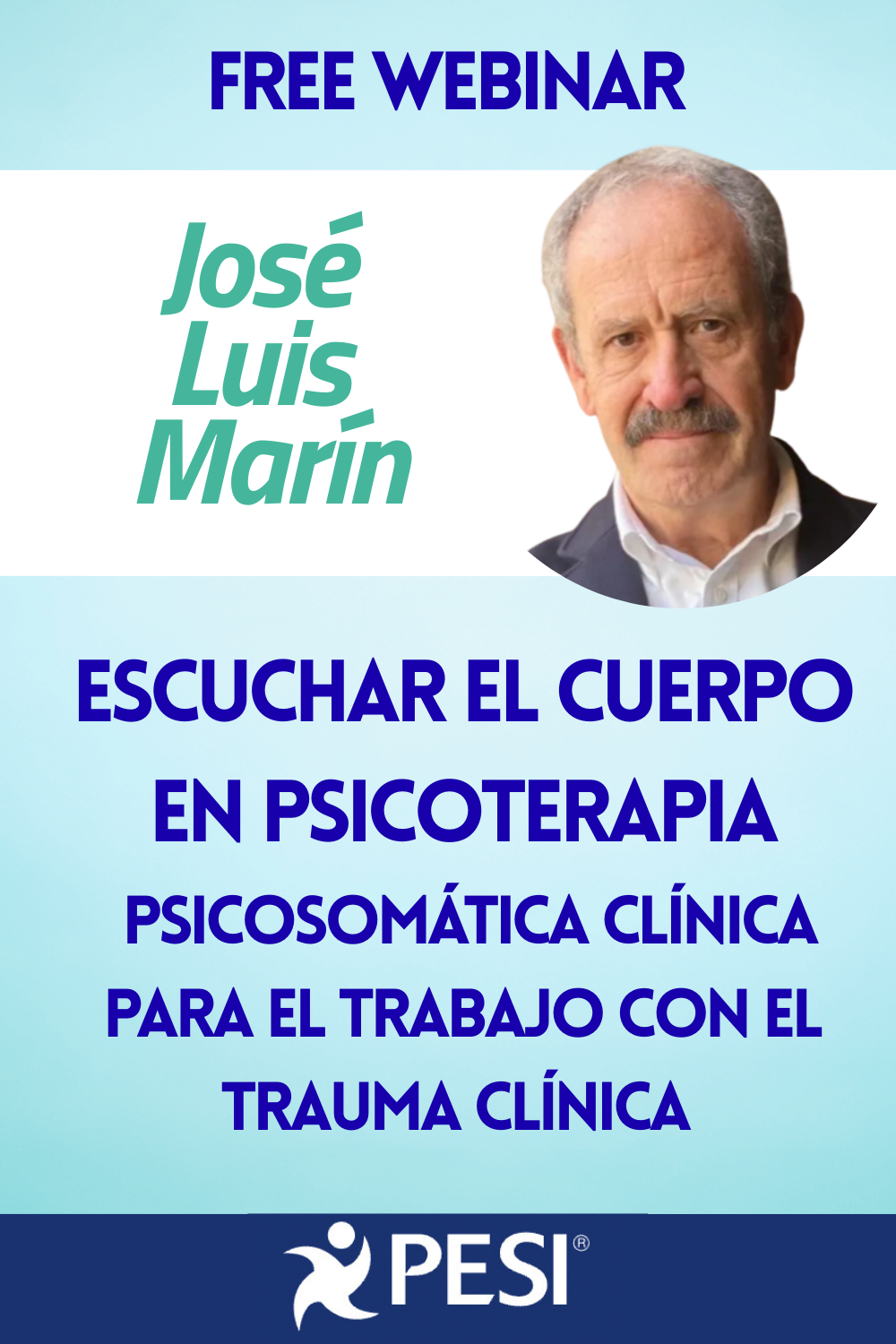
Listening to the Body in Psychotherapy: Clinical Psychosomatics for Working with Trauma
Live Webinar | Presented in Spanish
- Speaker:
- José Luis Marín
- Duration:
- 2 hours
- Language:
- Presented in ES, subtitles in EN, FR, DE, IT, and ES
- Format:
- Audio and Video
- Product Code:
- LWC150837
- Media Type:
- Live Webinar
Tags: Trauma
Description
This webinar is the second in a new series of free events created from listening closely to our Spanish-speaking community.
Through a dedicated survey, many clinicians shared their questions, daily challenges, and the topics they most wanted to explore in greater depth.
We carefully reviewed their responses — and this session is the first step in answering what they asked for.
For decades, we have said that the mind–body dichotomy is obsolete — that we can no longer separate the psychological from the physical — and yet we continue to do so. Separate systems, separate careers, separate specialties have been built.
Listening to the Body in Psychotherapy. Clinical Psychosomatics for Trauma Work
Medicine goes one way, psychology another, and in between stands the patient with their suffering, fragmented among professionals who rarely speak to one another. This seminar begins with an uncomfortable yet well-documented premise: human beings fall ill for lack of language. When there are no words to name suffering, the body speaks.
And it does so in a preverbal language learned long before we could say “it hurts” or “I’m afraid.” Today we know that early traumatic experiences — often silenced for years — produce alterations that manifest in the body through chronic inflammatory processes.
What appears in consultation as fibromyalgia, irritable bowel syndrome, dermatitis, or chronic pain may be the bodily expression of what could not be put into words. The problem is that almost no one asks.
And each time we miss the opportunity to ask, each time a patient is forced into silence because no one shows interest in their story, we retraumatize them.
This seminar offers tools to support that translation: to recognize bodily symptoms as messages that seek to be understood, and to integrate the biographical and the somatic in psychotherapeutic work with trauma.
Learning Micro-Objectives
• Recognize somatization as a legitimate language of psychological suffering, identifying in clinical practice when the body is speaking about experiences that could not be verbalized.
• Understand the mechanism by which chronic stress derived from early traumatic experiences produces bodily manifestations, integrating current contributions from the inflammatory model.
• Incorporate exploration of possible trauma history as part of the clinical assessment process, understanding that linking the physical with the biographical is, in itself, therapeutic.
Credit
Speaker
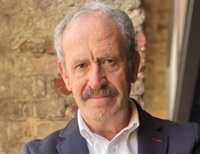
José Luis Marín Related seminars and products
José Luis Marín is a clinical psychologist and psychotherapist specializing in trauma, clinical psychosomatics, and mind–body integration in psychotherapy. His clinical and teaching work focuses on understanding how early traumatic experiences and chronic stress manifest through somatic symptoms, and on developing integrative approaches that link biographical, emotional, and bodily processes in treatment.
He has extensive experience working with complex trauma and stress-related disorders and regularly provides training for mental health professionals on trauma-informed and somatically oriented psychotherapy.
Additional Info
Program Information
Access Period for Live WebcastThis live webinar will take place on April 20 from 6:00 to 8:00 PM (Spain Time).
The session will be delivered live via Zoom, with the opportunity to interact directly with the instructor.
Objectives
Learning Micro-Objectives
• Recognize somatization as a legitimate language of psychological suffering, identifying in clinical practice when the body is speaking about experiences that could not be verbalized.
• Understand the mechanism by which chronic stress derived from early traumatic experiences produces bodily manifestations, integrating current contributions from the inflammatory model.
• Incorporate exploration of possible trauma history as part of the clinical assessment process, understanding that linking the physical with the biographical is, in itself, therapeutic.
Target Audience
This webinar is designed for psychologists, psychotherapists, psychiatrists, graduate students, and mental health professionals who want to deepen their understanding of trauma from a psychosomatic perspective and strengthen their clinical work through mind–body integration.Reviews
Satisfaction Guarantee
Your satisfaction is our goal and our guarantee. Concerns should be addressed to info@pesi.eu.
Please wait ...