

Applying Parts Work to Dissociation and Fragmentation

Once you understand dissociation and fragmentation in clients with complex trauma, as an intelligent survival response, best understood along a continuum, deeply tied to the body's polyvagal state, and requiring real capacity before we intervene directly, you're ready to bring that understanding into the room with you.
Here's how I actually bring parts work into session with clients whose trauma shows up as fragmentation.
Use Parts Language to Externalize, Not to Diagnose
I draw on a unified approach to parts work, pulling common threads across internal family systems, structural dissociation models, and ego state approaches, rather than pledging allegiance to any single school. The shared insight across these models is simple: the mind organizes overwhelming experience by separating it into distinct states or parts, each carrying its own emotions, beliefs, age, and role.
In practice, this means inviting curiosity rather than confrontation. Instead of asking a client to explain a confusing reaction, I ask what part of them felt that way, how old that part seems, and what it was trying to protect them from. Fragmentation stops being frightening once it has a name and a job description. A part that goes silent in conflict may be the same part that learned early on that showing distress made things worse at home. A part that takes over and lashes out may be the part that never got to fight back.
Track the Body Alongside the Part
Every parts work intervention I do includes body tracking. As a part comes forward, I ask what a client notices in their chest, stomach, or limbs. I ask whether they feel heavy, foggy, or far away. The goal is not just insight but a felt, physiological update, letting the body register that now is different from then. This is the piece I find most often gets skipped, and it's the piece that makes the difference between an intellectual understanding and an actual shift in the nervous system.
Practical Session Moves
A few concrete techniques translate this well into session work:
- Orient before diving in. At the start of any exploration of a difficult part, I help the client notice their current environment, using sight, sound, and touch, so there is a stable anchor to return to.
- Ask the part's age and role. This slows down fusion with the part and creates just enough distance for the adult self to stay present alongside it.
- Track exits, not just entries. I notice when a client begins to fog, flatten, or lose eye contact, and I gently slow down rather than pushing forward.
- Offer movement as completion. When a part carries a thwarted instinct, an unfinished urge to run, push, or call for help, I invite small physical movements in the here and now that let the body complete what it could not complete before.
- Normalize titration. Parts work with fragmented clients should happen in small, repeatable doses rather than long uninterrupted excavations. Repeated manageable contact builds trust with a part faster than one long session ever could.
Holding the Long View
Working with dissociation and fragmentation is slow, relational work. It asks us to resist the urge to rush toward integration and instead build a genuine, trusting relationship with each part before asking it to change. The parts that learned to disappear did so for good reason. Our job is not to force them out of hiding, but to help them discover, at their own pace, that it might finally be safe enough to be seen.
That, to me, is the heart of this work, and I hope this gives you both the understanding and the tools to bring more of it into your own practice.
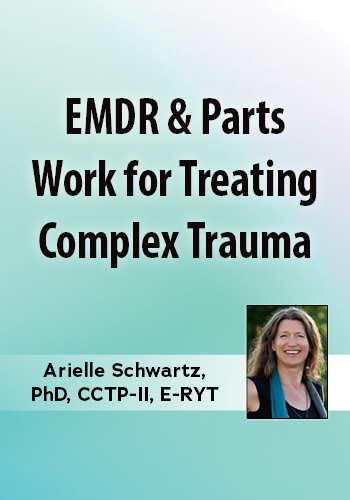
FREE training on integrating EMDR with a parts work approach. Join acclaimed trauma expert Arielle Schwartz, PhD for her best-selling program from PESI.


Complex Trauma Certification Training: Interventions from EMDR, Parts Work, CPT, and Polyvagal Theory. Free certification!


